Case Study - Art that Inspires

Offline to digital transformătion: Handmade art shop with PWA, Telegram bot and e-commerce

Project Details

Project Name

Art that Inspires

Domain

Handmade Art & Custom Portraits

Duration

4 months

Contact: contact@mdstore.md

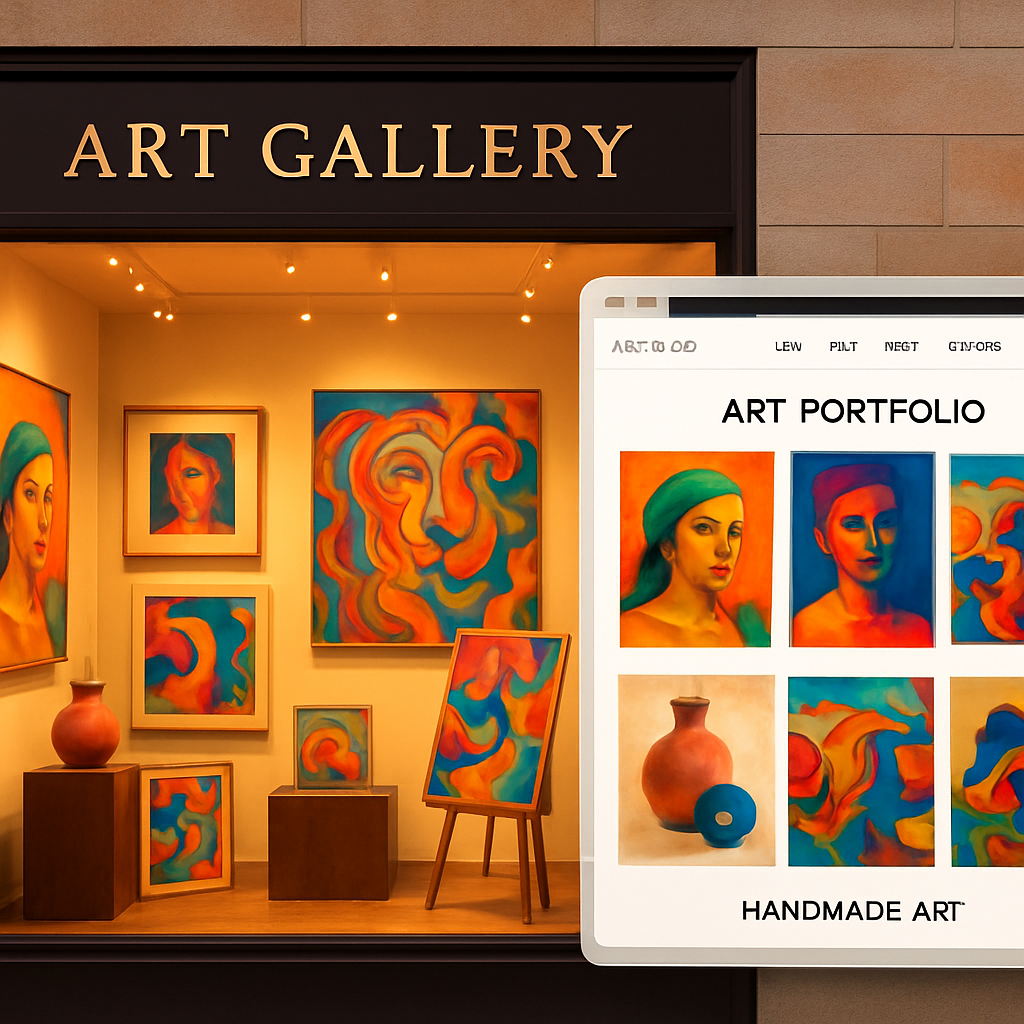
Art that Inspires is a handmade art and custom portrait shop. The challenge was creating a complete digital platform with online sales. We built a modern e-commerce site, PWA app, Telegram bot with integrated mini-app, and SEO indexing. Rezultate: professional online presence with access on multiple platforms.

Initial Situation

No online presence - only informal social media

Impossible to sell unique pieces online

Interested clients couldn't easily place orders

No Telegram integration for sales

No SEO - not appearing în Google searches

What We Implemented

E-Commerce Website

Modern e-commerce platform with professional art gallery and checkout

PWA Application

Installable phone app with offline support and optimized performance

Telegram Bot & Mini-App

Order bot and notifications + integrated Telegram mini-app

Modern Design

Elegant UI/UX reflecting the nature of art and brand

Day/Night Mode

Toggle dark/light mode for optimal visual comfort

SEO & Indexing

Google optimization for keywords: paintings, portraits, handmade art

Cloudflare Protection

DDoS protection, global caching, and CDN acceleration

Performance Optimization

PageSpeed Insights 90+, optimized images, lazy loading

Rezultate obținute

E-Commerce

Active

Functional direct online sales

PWA

100%

Installable app with offline mode

Telegram

Integrated

Functional bot + mini-app

SEO

Indexed

Pages în top Google results

Performance

92

PageSpeed Insights score

Protection

Cloudflare

DDoS + global CDN

Impact

Art shop now has professional online presence. Customers can order unique pieces directly from Telegram. PWA provides native app-like experience. SEO indexing brings consistent organic traffic.

Extended case study

How MDStore - Artă care Inspiră was built

Marketplace for local creators and products. We examine the decisions that transformed the initial requirement into a usable product for Moldovan creators and buyers of art, handmade and digital products.

Open MDStore

01 · Executive summary

Product, market and outcome

MDStore is a marketplace for art, handmade products and digital creations. The platform combines product discovery with creator pages, orders, personalized requests, offers and reviews. The project aims to give creators a storefront and commerce flow, and buyers a safer and clearer framework than transactions dispersed in messaging.

The project primarily serves Moldovan creators and buyers of art, handmade and digital products, within the market context of Republic of Moldova. The evaluation therefore goes beyond the visual appearance of the first page. A strong digital product must explain the offer, guide the user toward an appropriate action, keep information accessible on mobile devices, and remain manageable after launch. These criteria shaped the architecture, content, and implementation order.

The primary objective was to create a local marketplace where creators can publish, sell and receive custom requests. To achieve it, we treated the website as part of a system: public pages establish context, forms and actions capture intent, and the tools behind them organize follow-up. Every section therefore has a verifiable purpose. It does not merely fill space; it answers a real user question or removes an unnecessary step from the process.
02 · Context and strategy

From the initial problem to a clear structure

Local creators often sell through social media, where catalog, pricing, order and history are difficult to organize. A dedicated marketplace needed distinct roles, moderation, categories, order statuses, and mechanisms for custom work.

The first step was to separate mandatory requirements from ideas that could be added later. We mapped the audience, important actions, content types, languages, data requirements, and administration model. This analysis prevented the creation of an attractive page that would be difficult to extend. It also clarified what should remain public for indexing, what belongs in a private flow, and what information should be stored in the CRM or administration panel.

We built the platform around verified creator and approved product. Publishing is not fully automated, which allows for quality control. For custom work there is a separate request, offer and counter-offer flow so that negotiations are tracked in the product.

The strategy followed a simple order: users first understand where they are, then what they receive, why the solution is relevant, and what to do next. Trust elements were placed close to the decision instead of being hidden on a secondary page. Detailed information received its own level in the hierarchy, keeping the first screen focused while remaining available to people who compare offers carefully.

Categories and search support exploration, creator pages group identity and products, and product pages provide business details. Dashboards separate product, order, request and profile management. The blog explains how to use the platform for both audiences.

Information architecture has been validated through trails, not just through a list of pages. I've been watching what happens if the visitor goes straight from Google to an inside page, comes back from his cell phone, or ends up in an ad with a precise intention. Each route maintains access to context, offer and contact without forcing the user to manually return to the main page.

03 · Implementation

What was built and how it works

Implementation was divided into modules with clear responsibilities. This approach reduces dependencies between pages, allows targeted updates, and helps the team test important functions without blocking the entire product. Visual components follow shared rules, while content and user journeys are adapted to the project instead of being copied mechanically from a template.

Onboarding creators

Profile and posting are organized to protect the quality of the marketplace.

Catalog and categories

Products can be discovered by type, creator and context.

Custom orders

Ask, offer and counteroffer have a tracked flow in the platform.

Moderation and confidence

Approval and reviews reduce the risk of an uncontrolled catalog.

Functions confirmed in the public project

  • art and handmade marketplace
  • verified creators
  • manual approval of products
  • creator pages
  • personalized requests with offer and counteroffer
  • orders, reviews and blog

At the technical level, we paid attention to intermediate states: loading, error, confirmation, empty results, and returning to an unfinished flow. These situations are common in real use even though they rarely appear in static mockups. Messages and controls were designed so users understand what happened and can continue without immediate support.

Content was treated as part of the product. Headings explain the decision at hand, paragraphs use concrete examples, and buttons clearly name the action. We avoided generic wording that promises a great deal without explaining the deliverable. In a case study, this clarity is as important as the technology because it shows what was implemented and why the solution fits the project's audience.

04 · Experience and Conversion

A short but sufficiently informed route

The buyer can choose an existing product or submit a customized request. The creator can respond with an offer and track the order. The platform keeps relevant statuses and messages, reducing reliance on unverifiable external conversations.

The conversion route was designed around intent, not a single button. Early people need explanations and examples, while determined visitors seek price, contact or direct action. The page keeps both variants, but sets a clear visual priority. Secondary actions do not compete with the main action and contact remains accessible without aggressive windows.

The forms only require the data required for the relevant stage. An initial application should not be converted into a long questionnaire and an order should not be left without the information the team needs to reply to. Confirmation explains the next step and estimated time. This continuity reduces repeated messages and sends that the process is administered, not improvised after sending the form.

Marketplace is optimized for visual discovery on phone, but retains access to price, creator and action. Dashboards use mobile-friendly lists and controls, and product images have stable proportions to avoid layout jumps.

On mobile, the order of content has been revised separately. I didn't just shrink the desktop version. Titles, images, buttons, lists and spaces have been reorganized for one-handed reading. Interactive areas have stable dimensions, the text is not hidden in rigid containers, and long sections retain visible landmarks. For individuals using keyboard or assistive technology, labels, hierarchy of titles and focus states retain the meaning of actions.

05 · Discovery and data

SEO, measurement and administration after launch

Categories, creators, products and articles provide indexable surfaces. Controlling duplicate products, filters and inactive URLs is essential. Structured data and internal links can help engines understand the relationship between creator, product and offer.

The search optimization starts with a structure that the user can understand. Each important page has a main subject, descriptive title, description and links to the pages that complement the intention. The images have stable dimensions and descriptive alternative texts, and the addresses of the pages are kept simple. Canonical, sitemap and rules for crawlers support the same architecture and avoid indexing technical states, filters or private pages.

Internal links are used editorially: they explain the relationship between the project and the services that made it possible. External links send to the public product and verified sources, allowing the reader to compare the description with the actual implementation. We don't use an artificial list of keywords. The context, correct names and verifiable information are more useful for both humans and search engines.

Product views, contacts, orders, custom requests and offer progress are tracked. For the marketplace, the balance between supply and demand also matters: how many creators publish, how many products are approved and how many requests are answered.

Measurement is defined before reporting. Visits, scrolls and clicks are user indicators, but they are not automatically a business result. For each project, actions that have value are tracked: requests, calls, orders, access to a function or return. Events are consistently referred to so that data can be compared between pages and periods without different manual interpretations from one relation to another.

Moderation, categories, commissions, orders and legal content require ongoing administration. Role-based architecture allows extending functions without exposing private data. Backup and approval rules are part of the product's operation.

The launch does not complete the project. It is necessary to check forms, update information, monitor errors, review dependencies and regularly control indexed pages. The roles and rights of access limit accidental changes and safety copies and history of changes reduce operational risk. A modular structure allows expansion without affecting routes that already operate.

Project related services

These links provide additional technical context and describe the supplies used in implementation.

06 · Verifiable Gallery

Product images and interfaces implemented

The screenshots below document the project; they are not decorative images. Each one can be opened at a larger size to inspect the hierarchy, content, and interface details. The gallery is placed beside the technical explanation so readers can verify the connection between the decisions and the visible result.

07 · Conclusions

What can be reused in future projects

The most important conclusion is that a digital product should not be assessed as a collection of screens. Its value lies in the connection between the message, interaction, data, and the process that follows contact. For MDStore - Artă care Inspiră, this link was built from the specific needs of the segment Moldovan creators and buyers of art, handmade and digital productswithout forcing the project into a universal structure.

The second conclusion is that visible simplicity requires work in architecture. For a user to see few clear choices, the system must manage pages, states, roles, content and measurement correctly. This complexity must not be transferred to the interface. It is organised behind and progressively revealed only when it becomes relevant.

  1. 01Marketplace needs rules and moderation before scaling.
  2. 02Custom work requires a different flow than buying a standard product.
  3. 03Creator pages are commercial assets and important SEO surfaces.

Sources and public projects

The analysis was confronted with available public pages. The links below are provided for direct verification and additional editorial context.

08 · Frequently Asked Questions

Questions about achieving MDStore - Artă care Inspiră

Why wasn't the project treated as a simple template?

Because MDStore - Artă care Inspiră serves Moldovan creators and buyers of art, handmade and digital productsand this audience has its own path, language and confidence criteria. A template can speed up prototyping, but it cannot decide on its own what information to publish, what action is priority, how to keep the context between pages or how to measure the result. The final structure was built from the requirements of the project, then visually unified through reusable components.

How was the mobile version checked?

The important flows have been reviewed at different sizes, carefully in the order of content, the size of the pressing areas, legibility, images and forms. The mobile is not a small copy of the desktop. Some elements change order, the lists are simplified and the main proceedings remain available without covering content or other checks.

What does it mean that the project is ready for SEO?

It means that public pages have clear topics, titles and own descriptions, semantic hierarchy, descriptive images, internal links and stable addresses. The sitemap, canonicals and indexation rules support the same structure. SEO is not a promise of position, but the technical and editorial capacity of the site to be discovered, understood and evaluated correctly by search engines.

How can the product be extended after launch?

The modules are separated so that MDStore - Artă care Inspiră be able to receive new pages, functions, integrations and content without complete reconstruction. Expansion starts with user data and actual customer questions. New functions are prioritised by impact, dependency and cost of administration, not just by the fact that they can be technically added.

What is being followed after publication?

The availability of pages, errors, forms, relevant actions, speed and navigation behaviour shall be monitored. The data shall be interpreted in relation to the objective of the project. If a page attracts traffic, but does not lead to useful action, the message, information order and supply shall be reviewed before increasing the promotion budget.

Vrei un proiect similar?

Contactează-ne pentru a discuta strategia digitală pentru afacerea ta.